The look of stone, the slab of concrete, and a sealer that survives the beach sun
Slate, flagstone, travertine and wood-plank patterns pressed into a reinforced slab with integral color — on a patio, a pool deck, a walk or a driveway, for half the cost of the real thing and none of the weeds between the joints.
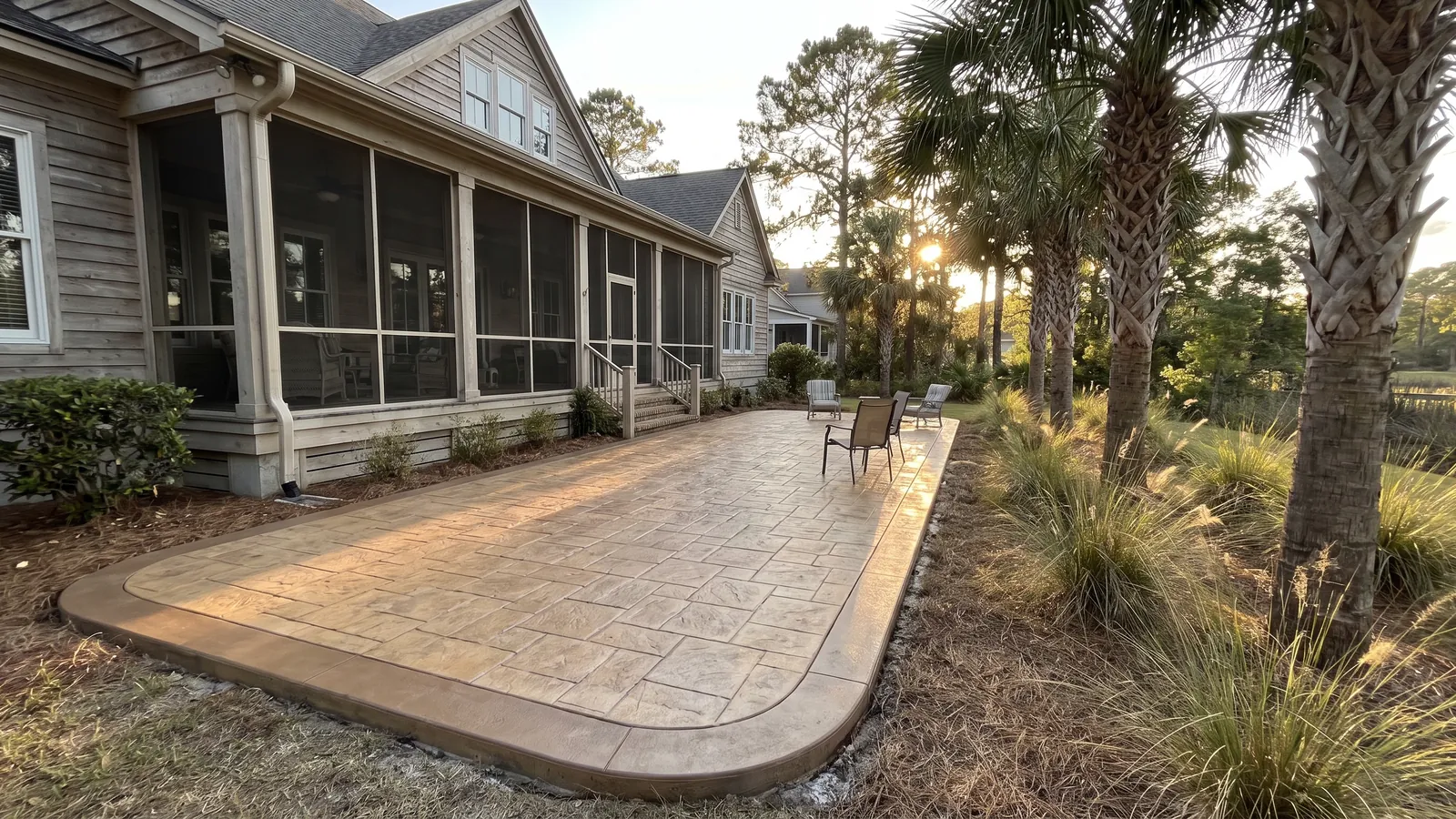
Stamped concrete is a regular reinforced slab — same compacted base, same thickness, same joints — with color mixed through the whole batch, a contrasting release agent dusted on the surface, and a pattern pressed in with polyurethane mats while the concrete is still plastic. Done right, it reads as stone from ten feet and lasts like concrete; done wrong, it fades to pink in two summers and the sealer peels. The difference on the Grand Strand is almost entirely sun and salt: a pigment that isn't UV-stable bleaches, a sealer that isn't rated for salt air chalks and whitens, and a slab that wasn't cured properly before sealing traps moisture and blushes. We use integral color rather than surface-only dyes, a UV-stable solvent-based or high-build water-based sealer, and we come back to reseal every two to three years, which is the whole maintenance schedule.
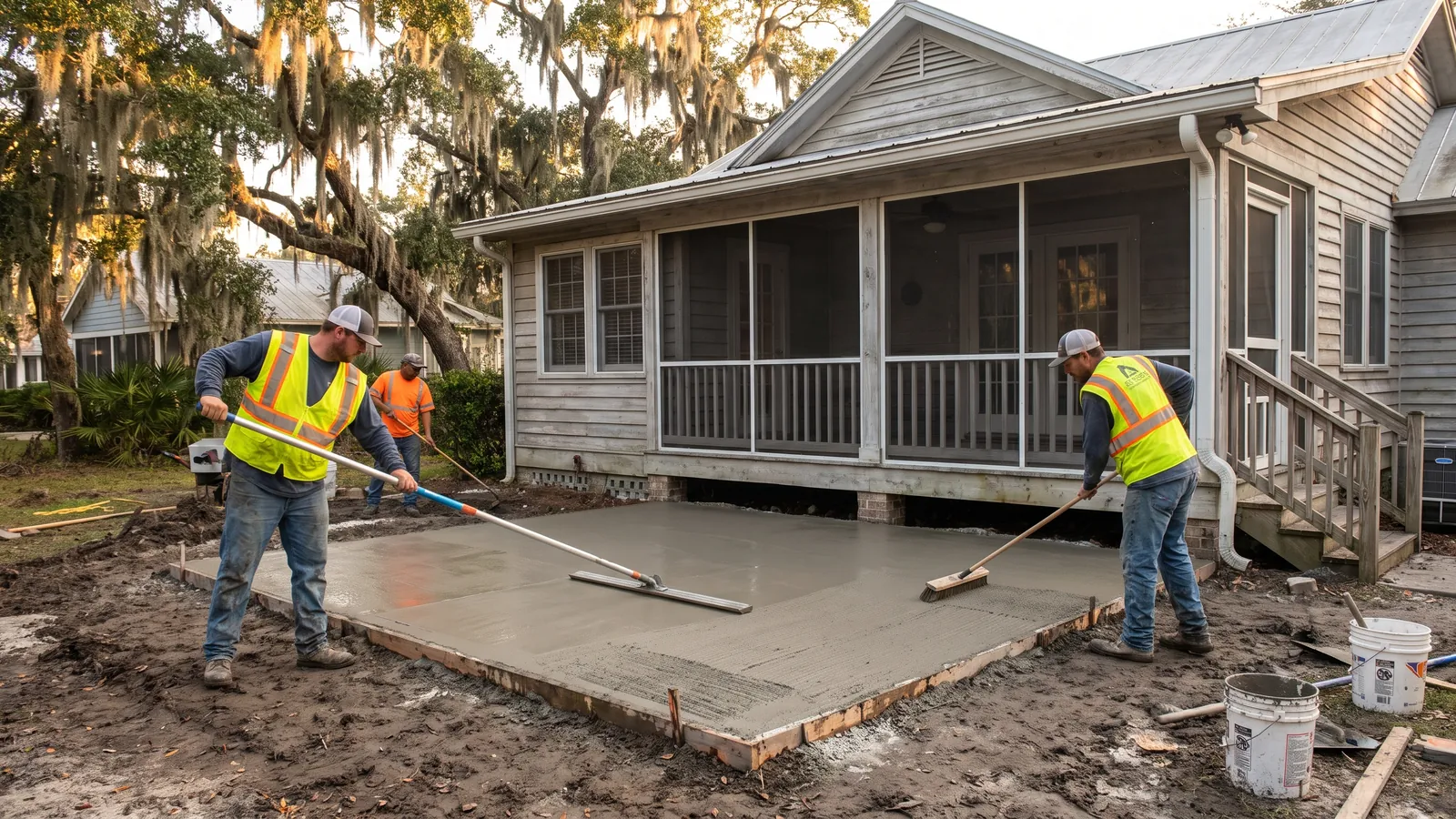
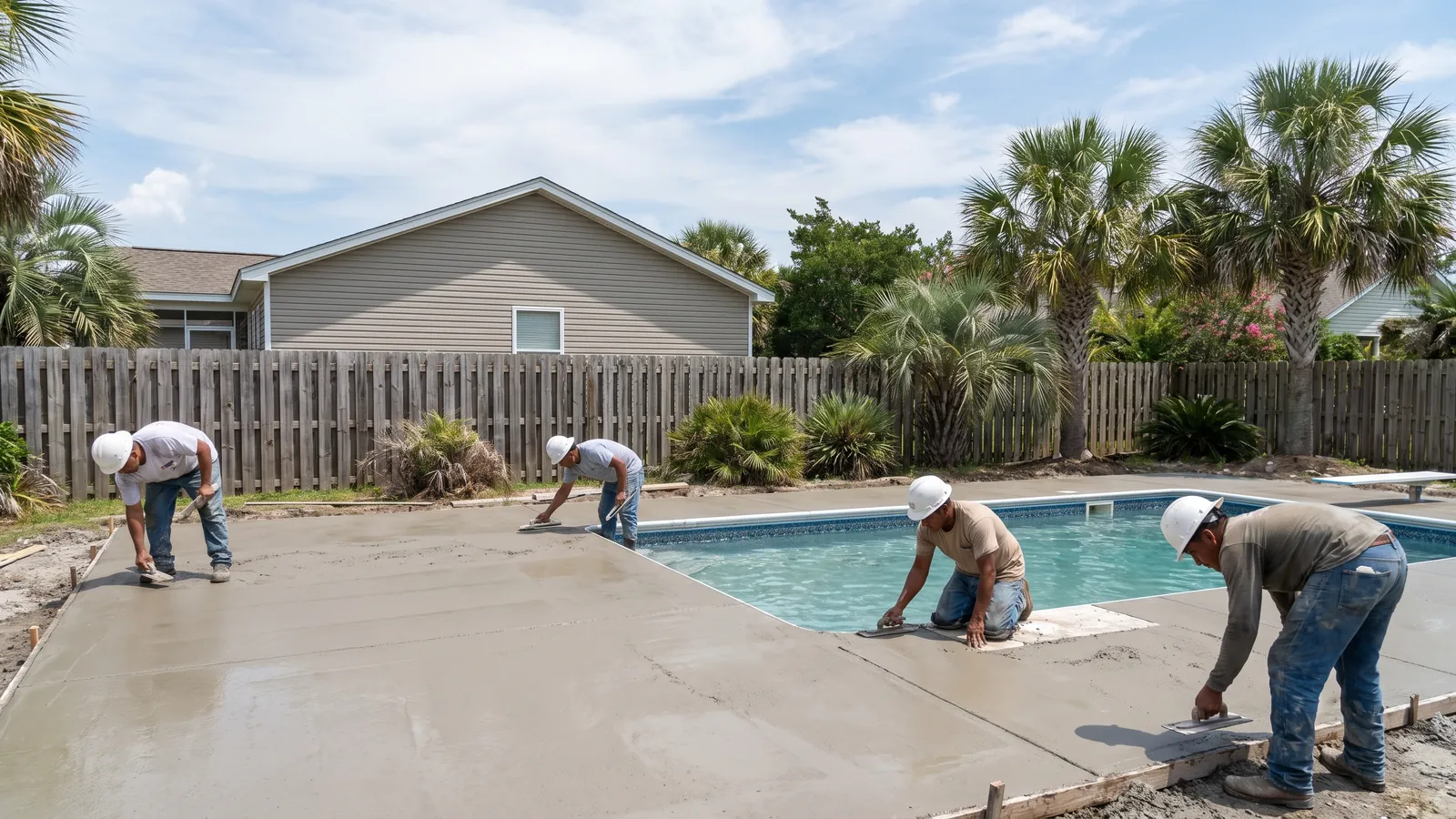
The patterns Grand Strand homeowners pick most: ashlar slate for patios and pool decks (clean lines, hides sand), random flagstone and seamless texture for a natural look around a fire pit, wood plank for porches and under raised houses, and cobble or brick for driveway borders where the HOA wants the look of the entry. Colors run sand, buff, tan and gray — the lighter the cooler, which matters on a pool deck in August. Stamped work is a hot, fast, two-crew job: the window between the pour and the stamp is an hour or two in summer, so we pour at dawn and we don't stamp more than we can finish before the slab sets.
What's included
Integral color
Pigment through the whole batch, not a surface dye; a release color for the second tone.
Patterns
Ashlar slate, random flagstone, seamless texture, wood plank, cobble, brick borders, exposed aggregate.
UV-stable sealer
Rated for sun and salt; resealed every 2–3 years, which is the only maintenance.
Same slab underneath
Compacted base, fiber or coated reinforcement, control joints hidden in the pattern lines.
Non-slip additive
Grit in the sealer on pool decks and steps so a stone look doesn't mean a slick surface.
Borders and bands
Smooth or contrasting borders that frame the field and hide the joint layout.
Stamped concrete cost in Myrtle Beach, SC
| Job | Typical price | Notes |
|---|---|---|
| Stamped patio, basic pattern and one color, per sq ft | $12 – $15 | Ashlar slate, flagstone |
| Stamped with border and two colors, per sq ft | $15 – $20 | Most Grand Strand patios and decks |
| High-end: multiple patterns, hand coloring, per sq ft | $20 – $28 | Entries, courtyards |
| Typical 300 sq ft stamped patio | $4,200 – $6,500 | Including base, reinforcement, sealer |
| Stamped driveway border or apron band | $1,200 – $3,500 | Cobble or brick band on a broom field |
| Reseal, per sq ft | $1.50 – $3 | Every 2–3 years |
These are 2026 Grand Strand ranges so you can budget. Your written price is itemized — removal, base, thickness, reinforcement, finish, joints, the permit and its inspections — and good for 30 days.
Recent work
Questions we get about stamped concrete
Does stamped concrete fade at the beach?
Cheap surface-dyed work does, badly. Integral color with a UV-stable sealer holds its color for years and comes back fully with a reseal. We've seen ten-year-old stamped decks on the oceanfront that still look right because they were sealed on schedule.
Is stamped concrete slippery?
Sealed smooth, yes. We add a grit to the sealer on pool decks, steps and walks so it grips wet, and the textured patterns help. A seamless slate texture with grit is about as grippy as a broom finish.
Stamped concrete or pavers?
Stamped is one slab with no joints for weeds and sand, cheaper per square foot and faster; pavers can be lifted and relaid if the sand settles and never crack, but settle more often. See our concrete versus pavers guide.
How long until I can use it?
Walk on it in two days, furniture in a week, cars on a stamped driveway in 28 days. The sealer goes on after the slab has cured, usually at the two-to-four-week mark, and we come back for it.